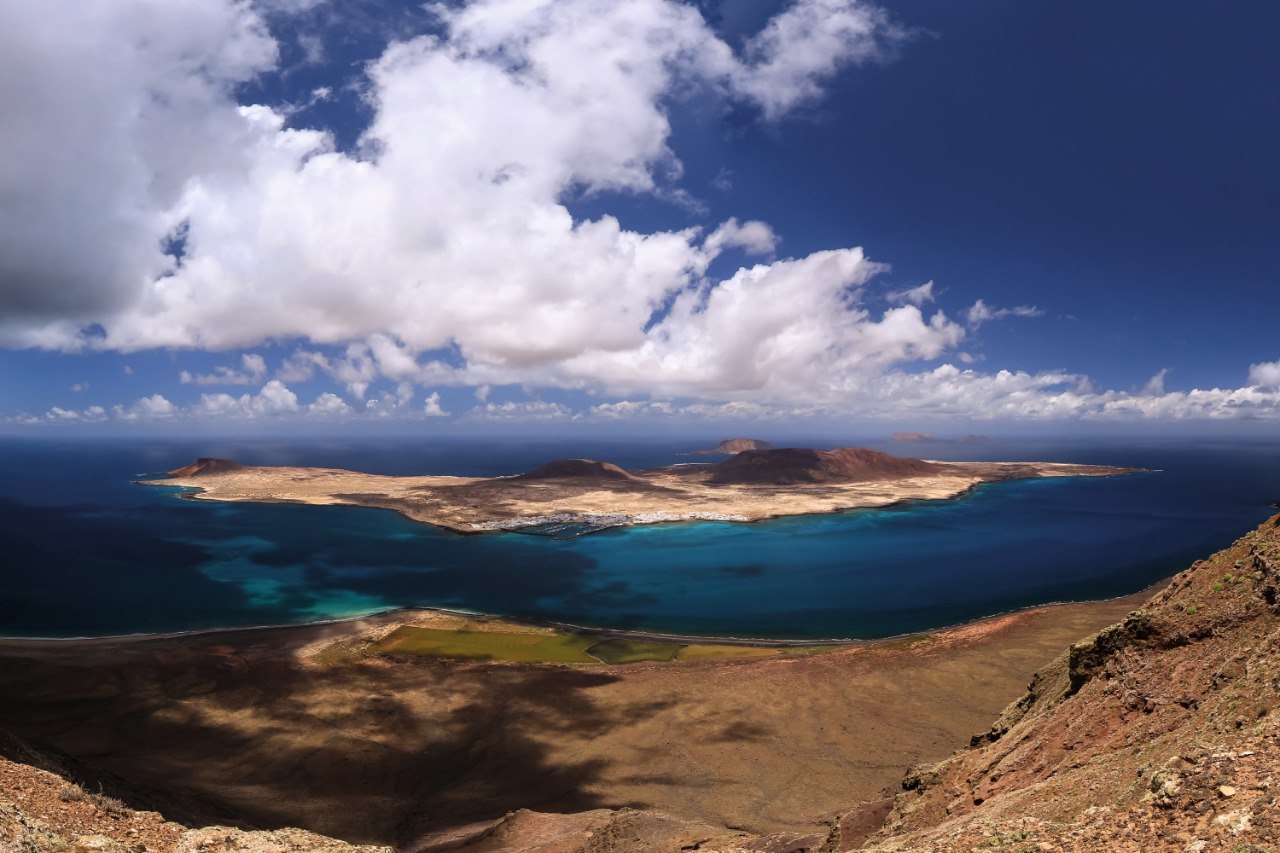
La Graciosa island viewed from Lanzarote — turquoise lagoon between Lanzarote and the small volcanic island with golden beaches and the Risco de Famara cliffs

Day Trips from Lanzarote — La Graciosa, Fuerteventura & Lobos

Three islands you can reach from Lanzarote in under an hour by ferry — each one completely different from the other. La Graciosa is a car-free sand-and-volcano paradise. Fuerteventura is the second largest Canary Island with Sahara-style dunes. Isla de Lobos is a tiny nature reserve with the clearest water in the archipelago. Ferry companies, prices, what to do, and the honest truth about which one is worth your day.

Jump to: La Graciosa ↓ Fuerteventura Isla de Lobos Comparison table Practical tips FAQ
La Graciosa island — Playa de la Francesa golden sand beach with turquoise water and volcanic hills, the small car-free island north of Lanzarote

La Graciosa — the car-free island 25 minutes away

The easiest and most rewarding day trip from Lanzarote. La Graciosa is the eighth Canary Island — a tiny, flat, car-free sand-and-volcano paradise sitting in the strait between Lanzarote's northern cliffs and the open Atlantic. There are two villages (Caleta de Sebo, the main one, and Pedro Barba), a few sandy roads, no asphalt, and some of the most spectacular beaches in the Canaries. The whole island feels like the Lanzarote of 40 years ago.

How to get there: The ferry leaves from Órzola, the fishing village at the very north tip of Lanzarote. The crossing takes 25 minutes and costs €20–28 return. Two companies run the route: Biosfera Express (the faster, modern boat) and Líneas Romero (slightly cheaper, older boat, also carries cargo). Both dock at Caleta de Sebo. The crossing is usually calm — the strait is sheltered by the Risco de Famara — but on rough days it can be bouncy.

Ferry: Órzola → Caleta de Sebo, 25 min · Price: €20–28 return · Companies: Biosfera Express, Líneas Romero · First boat: ~8:00am · Last return: ~6:30pm (earlier in winter)
Getting to Órzola: You'll need a car — the drive from Arrecife is 40 minutes, from Puerto del Carmen 50 minutes, from Playa Blanca over an hour. Parking is free along the road and in the harbour area. No public bus reaches Órzola early enough for the morning ferry. If you haven't rented a car yet, compare rental prices here. Prefer not to drive? There are organised day tours to La Graciosa that include the ferry and island transport.

What to do: The two must-see beaches are Playa de la Francesa — a 300-metre crescent of golden sand with flat turquoise water, a 25-minute walk from the village along a sandy track — and Playa de las Conchas, a wilder, longer beach on the northwest coast with views across the Bocaina Strait to Lanzarote's cliffs. La Conchas has strong currents and is not always safe for swimming; La Francesa almost always is. You can walk between them or rent a bicycle in Caleta de Sebo (€10–15/day) — the island is flat enough to cycle, though the sand tracks can be hard going.

Where to eat: Caleta de Sebo has a handful of simple restaurants along the waterfront. The fish is whatever came off the boat that morning — go to El Coromoto or Casa Mateo for fresh grilled fish and a cold beer. Nothing fancy, everything honest. There is also a small supermarket if you want to buy water and snacks for the beach.
Local tip: Get the first ferry of the day (around 8am). You'll have Playa de la Francesa almost to yourself until the day-trip crowds arrive at 11. Bring plenty of water — there is no shade anywhere on the island and no freshwater source. Sunscreen, a hat, and something to sit on are non-negotiable. The walk to La Francesa is along a sandy track with no shelter — in August it is brutal after 11am.
📍 Open La Graciosa (Caleta de Sebo) in Google Maps
DT01
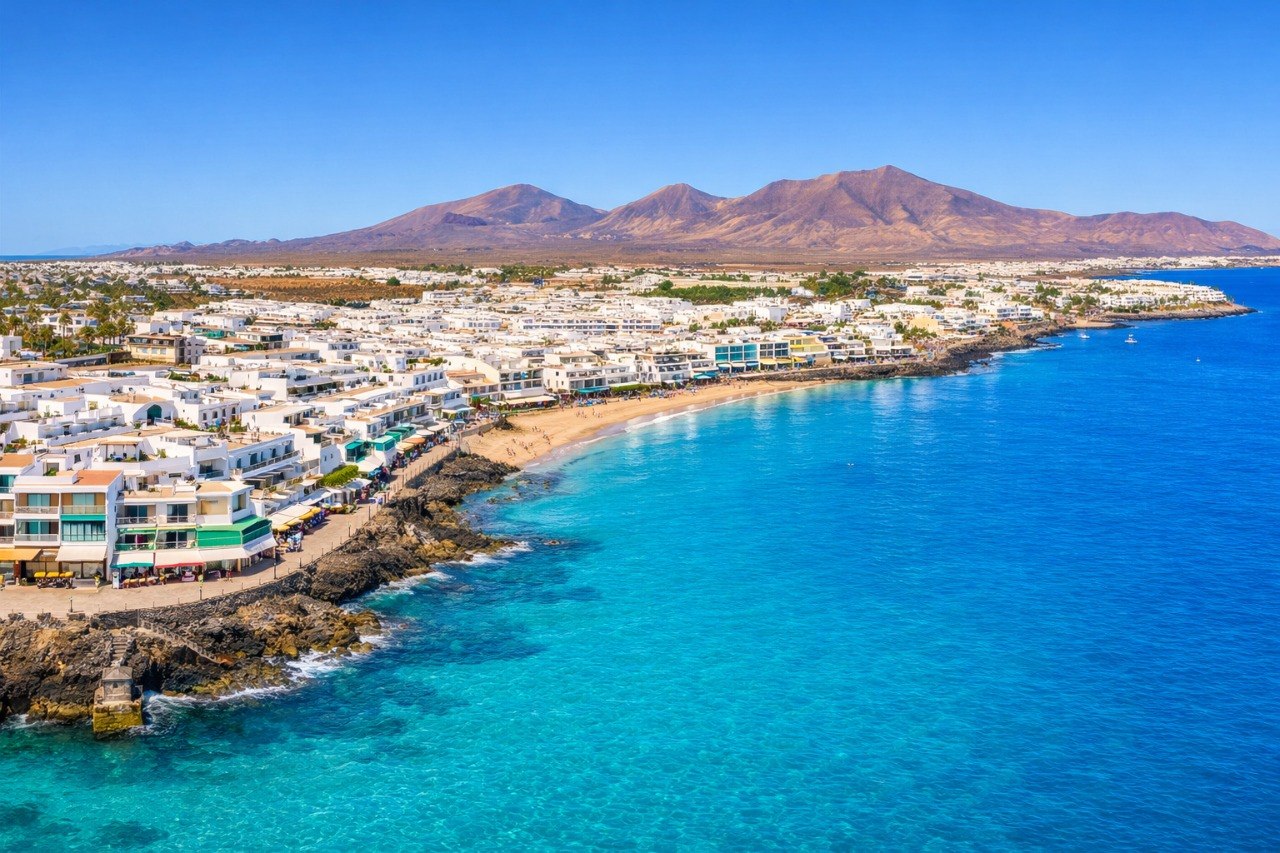
Playa Blanca coastline in southern Lanzarote — departure point for ferries to Fuerteventura, with the harbour and views across the Bocaina Strait to Corralejo

Fuerteventura — the big neighbour with Sahara dunes

Fuerteventura is the oldest and second-largest of the Canary Islands, sitting just across the Bocaina Strait from Playa Blanca. It is a completely different island — flatter, drier, with enormous sand dunes that look like the Sahara and over 150 km of beaches. The crossing is short and frequent, making it the most accessible "other country" day trip from Lanzarote.

How to get there: Ferries depart from Playa Blanca (southern Lanzarote) to Corralejo (northern Fuerteventura). The crossing takes 30–45 minutes depending on the boat and costs €25–35 return. Two companies run the route: Fred Olsen Express (the faster, modern ferry — around 30 min) and Naviera Armas (the traditional ferry, slower, also carries cars). Both run multiple sailings a day year-round.

Ferry: Playa Blanca → Corralejo, 30–45 min · Price: €25–35 return (foot passenger) · Companies: Fred Olsen Express, Naviera Armas · First boat: ~8:00am · Last return: ~7:00pm (earlier in winter) · Car ferry: Yes (Naviera Armas) — €60–90 return with a small car
Getting to Playa Blanca harbour: If you're staying in Playa Blanca, you can walk to the port. From Puerto del Carmen it's a 30-minute drive; from Costa Teguise, 40 minutes. The bus (Line 30) connects Arrecife to Playa Blanca but the timetable does not always sync with early ferries. If you're driving, there is paid parking at the port. Compare rental prices here if you haven't booked yet. You can also book a guided day tour from Lanzarote to Fuerteventura with ferry and transport included.

What to do: The highlight is the Corralejo Natural Park — massive rolling sand dunes that stretch for kilometres along the northeast coast, with golden sand blown in from the Sahara. You can walk among them, photograph them, or just stand in them and feel like you're in the Sahara. The dunes border several stunning beaches: Playa Grande de Corralejo, Playa del Moro, and the long sweep of Alzada. The water here is a clearer, warmer blue than most of Lanzarote.

If you have a car on the ferry (or rent one in Corralejo), you can drive west to El Cotillo — a laid-back surf village with two lagoons, a historic lighthouse, and some of the best sunsets on the island. The drive takes about 30 minutes from Corralejo. If you're on foot, stay in Corralejo town — it has good restaurants, a lively main street, and the dunes are a short taxi ride or a 45-minute walk from the harbour.

Local tip: Is Fuerteventura worth a day trip from Lanzarote? Honestly — only if you have already seen the highlights of Lanzarote, or you have more than a week here. Lanzarote packs more variety into a smaller space. Fuerteventura's trump card is the scale of the dunes and the length of the beaches. If you do go, take the first ferry, rent a car in Corralejo (book ahead), and do the Corralejo dunes → El Cotillo loop. Do not try to see the whole island — it is enormous.
📍 Open Corralejo (Fuerteventura) in Google Maps
DT02
Isla de Lobos nature reserve — small volcanic island with a natural lagoon, clear turquoise water and walking trails, seen from the ferry crossing between Lanzarote and Fuerteventura

Isla de Lobos — the tiny nature reserve between two islands

The smallest and most protected of the three. Isla de Lobos is a 4.5 km² island sitting in the Bocaina Strait between Corralejo (Fuerteventura) and Lanzarote. It is a designated nature reserve — no permanent residents, no hotels, no cars, just a lagoon, a volcano, a lighthouse, and some of the clearest water you will ever swim in. The name means "Island of Seals" — the original monk seals were hunted to extinction centuries ago, but the name stuck.

How to get there: The simplest way is the foot ferry from Corralejo harbour on Fuerteventura — a 15-minute crossing that costs around €15–20 return. If you are coming from Lanzarote for the day, you take the Playa Blanca → Corralejo ferry first, then hop on the Lobos ferry. The crossing to Lobos runs several times a day in high season. Alternatively, several catamaran tours from Lanzarote (departing from Puerto del Carmen or Playa Blanca) include a stop at Lobos with snorkelling, lunch, and drinks on board — a more relaxed option if you don't want to sort out two ferry tickets.

Ferry: Corralejo (Fuerteventura) → Isla de Lobos, 15 min · Price: €15–20 return · Catamaran from Lanzarote: €50–80 (includes lunch, drinks, snorkel) · Daily visitors capped: 200 people — book ahead in summer
Getting there from Lanzarote: The most popular route is a catamaran tour from Puerto del Carmen or Playa Blanca — they handle all the logistics and you get a boat day with snorkelling and lunch included. If you prefer to go independently, take the Playa Blanca → Corralejo ferry (30–45 min), then the Corralejo → Lobos ferry (15 min). It sounds like a lot of ferries, but it is a genuinely stunning day out. Compare rental prices here for the drive to Playa Blanca.

What to do: The island is small enough to walk around in 2–3 hours. The main trail leads from the dock to El Puertito, a shallow turquoise lagoon on the south coast that is the best snorkelling spot in the entire Chinijo Archipelago — calm, clear, full of wrasse and parrotfish. From there, you can hike up Montaña de la Caldera, the island's 127-metre extinct volcano, for panoramic views across the strait to both Lanzarote and Fuerteventura. The Faro de Lobos lighthouse at the northern tip is a flat walk across salt flats and lava — bleak, beautiful, and quiet.

The truth: Lobos is small. You can see everything in half a day. But that is the point — it is an unspoiled nature reserve with no development, water so clear you can see the bottom 10 metres down, and a genuine sense of being somewhere most people never go. Bring water shoes (no sand, all volcanic rock), snorkel gear, and lunch — there are no restaurants or shops on the island.

Local tip: Daily visitor numbers are capped to protect the reserve. In summer and on Spanish holiday weekends, book your Lobos ferry ticket online a few days ahead — they do sell out. The snorkelling at El Puertito is best at mid-to-high tide. At low tide the lagoon becomes too shallow to swim in. Check the tide times before you go.
📍 Open Isla de Lobos in Google Maps
DT03

Comparison — which island should you visit?

All three are reachable in under an hour, but they suit completely different days out. Here is the honest breakdown to help you pick.

Destination Travel time Ferry cost (return) Best for Time needed
La Graciosa 25 min from Órzola €20–28 Beaches, walking, car-free escape, "old Lanzarote" feel Full day
Fuerteventura 30–45 min from Playa Blanca €25–35 (foot); €60–90 (with car) Sahara dunes, long beaches, a bigger-island experience Full day (don't attempt in less)
Isla de Lobos 15 min from Corralejo (+30 min PB→Corralejo) €15–20 (+ Playa Blanca ferry); €50–80 catamaran from Lanzarote Snorkelling, nature reserve, volcano hike, crystal water Half day to full day

Practical tips for any ferry day trip

Book online, save money

Ferry tickets bought online are almost always cheaper than at the port. You also skip the queue and guarantee a spot in peak season. Book 2–3 days ahead in summer.

Bring serious sun protection

La Graciosa and Lobos have zero shade — no trees, no umbrellas, no shelters. Bring a wide-brimmed hat, SPF 50, a long-sleeve rash vest if you're snorkelling, and reapply every two hours. The UV index in the Canaries regularly hits 11+ in summer.

Check sea conditions the night before

Ferries can and do get cancelled when the Atlantic swell is too high — most often in winter. Check windguru.com or the ferry company's social media. If a cancellation is announced, switch to a Lanzarote day instead — don't waste a morning waiting at the port.

Take the first ferry, not the second

The early boat gives you 2 extra hours on the island before the crowds land. La Graciosa's Playa de la Francesa is empty at 9am and packed by noon. The same applies to Lobos — the snorkelling lagoon is best before the day-trip boats arrive.

Bring water and food

La Graciosa has a small supermarket and a couple of restaurants. Lobos has nothing. Bring at least 2 litres of water per person and a packed lunch. On any of the three islands, finding water after the morning is not guaranteed.

Don't book non-refundable things

If the ferry is cancelled, your restaurant reservation or paid excursion on the other island is lost. Book refundable or flexible options, or skip bookings entirely — all three islands can be done without pre-arranged anything beyond the ferry ticket.

FAQ

Do I need to book the ferry to La Graciosa or Fuerteventura in advance?

In summer, Easter and any Spanish holiday week — yes, book online a few days ahead. The La Graciosa ferries from Órzola fill up fast in peak season, especially morning sailings, and you can easily get stranded waiting for the next boat. Outside those periods you can usually walk up and buy a ticket at the port, but booking online is still cheaper and guarantees your slot. The Fuerteventura ferries from Playa Blanca have more capacity and rarely sell out, but online booking saves you queuing at the port and is often a few euros cheaper.

Can you take a car to La Graciosa?

No. Private cars are not allowed on La Graciosa — only residents' vehicles. You park at the port in Órzola (free parking along the road and in the harbour area) and walk on as a foot passenger. The ferry crossing is only 25 minutes and Caleta de Sebo is a 2-minute walk from the dock. On the island you get around on foot, by bicycle (rentable in the village for €10–15/day) or by taxi (a handful of 4x4 vehicles). If you have mobility issues, speak to the ferry staff — they can help arrange transport on arrival.

Is Fuerteventura worth a day trip from Lanzarote?

It depends on how much time you have. If you have a week or less in Lanzarote and have not yet seen Timanfaya, the Manrique centres, the north coast and Papagayo — stay on Lanzarote. If you have two weeks, or you have already done the highlights, then yes: a day in Corralejo and the dunes is a genuinely different landscape and worth the crossing. Just do not try to see the whole of Fuerteventura in a day — it is the second largest Canary Island and you will spend your whole trip in the car.

Can you swim at Isla de Lobos?

Yes. The lagoon on the south side (El Puertito) has calm, shallow, crystal-clear water that is perfect for swimming and snorkelling. It is a protected nature reserve, so you must stay on the marked paths and swim only in the designated area. Bring water shoes — the shore is volcanic rock, not sand. The snorkelling is excellent: wrasse, parrotfish, and sometimes octopus in the rocky shallows. Best at mid-to-high tide.

What happens if the ferry is cancelled due to rough seas?

If the sea state is too rough, the ferry company will cancel the sailing for safety. This happens most often in winter when Atlantic swells are larger. You will get a full refund or a rebooking for the next available sailing — but your day trip is lost. This is why you should never book a non-refundable excursion or restaurant on the other island. Check the sea forecast the night before, and if a swell warning is in place, have a backup plan for the day on Lanzarote itself.

Written by Alex — Lanzarote resident for 20+ years. Every ferry route and island in this guide has been done personally. Read more about me →

Last updated: July 2026 · No paid placements · Suggest a correction

Related guides

🏖️ Best Beaches
Read →
🚌 Getting Around
Read →
🏛️ What to See
Read →
🍽️ Best Restaurants
Read →