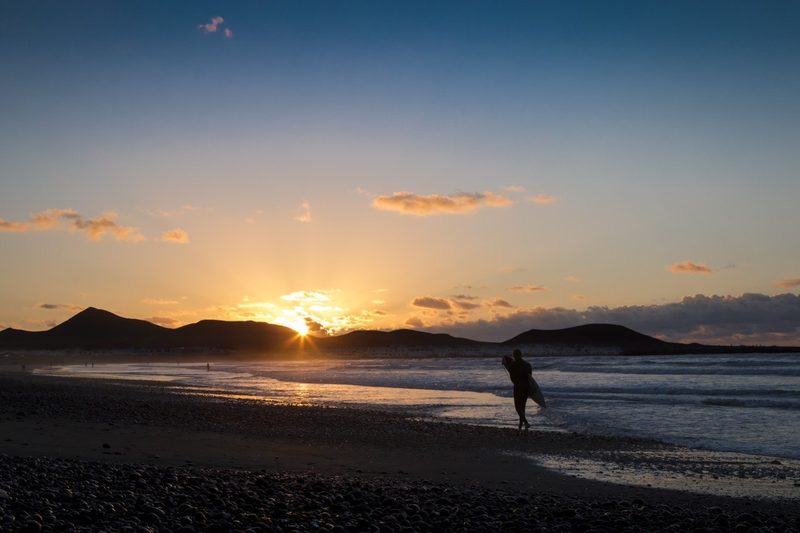
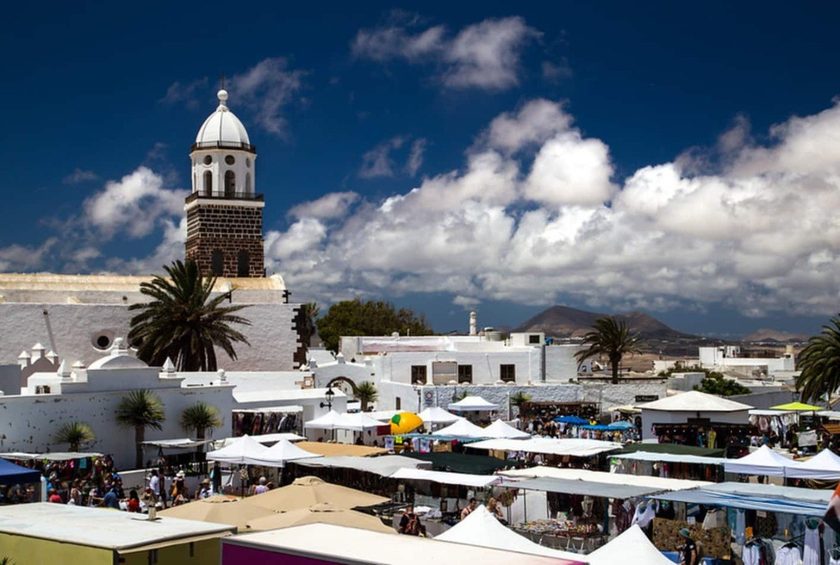
Playa de Famara Lanzarote at sunset — long empty beach with volcanic cliffs silhouetted against golden sky

How to pick the right beach in Lanzarote today

Lanzarote is a windy island. The rule is simple: pick the coastline sheltered behind the mountains for the wind direction of the day. 14 best beaches by category, three nudist spots that are actually fine, and the etiquette that keeps our favourite coves unspoilt. No top-10 listicle, no peloteo. Just the truth from people who swim here every week.

Jump to: Beach by wind ↓ 3 zones Papagayo Famara Punta Mujeres Cala Cera Los Charcones Garita Janubio Nudist Etiquette FAQ

How to choose a beach based on the wind

The wind decides everything. The prevailing trade wind (the alisio) blows from the northeast, year-round, stronger in summer. The secret is to pick the coastline sheltered behind the mountains according to the wind direction of the day. This is the only rule that matters.

NE alisio (most common, May–Sep)

Go south or southeast. Papagayo, Playa Blanca, Playa Dorada, Playa Flamingo, Puerto del Carmen, Playa Quemada. Avoid the exposed East Coast (Costa Teguise) altogether — windsurfers' paradise, swimmer's nightmare.

N or NW (usually in winter)

Go east or southeast. Punta Mujeres, El Charcón (Arrieta), Playa de la Garita, Caletón Blanco (Órzola). Avoid Famara — northerly winds hit the coast head-on, making the sea very dangerous.

S or SW (uncommon, mainly in autumn)

Go north or northwest. Famara Beach becomes completely flat, clean, and virtually wave-free. Avoid the South Coast (Playa Blanca) — the sea will be rough and choppy.

Calima (SE wind from Sahara)

Stay indoors or avoid strenuous activities. Air quality becomes extremely poor. The sea is usually calm along the northern and western coasts, but in summer temperatures often exceed 35°C (95°F); winter calimas bring dense dust even if temperatures stay around 25°C (77°F).

The 3 real beach areas of Lanzarote

South and Southeast Coast

(Playa Blanca, Papagayo, Puerto del Carmen, Playa Quemada) — Calm, family-friendly, full services

The entire coastal strip running from the southern tip of the island to the central eastern coast, facing Fuerteventura. This coastline is perfectly protected from the trade winds by the island's terrain and the Los Ajaches mountain range. The sea is usually very calm — pool-like water, golden sandy beaches, ideal for snorkelling and families. Choose this area if you want services, sun loungers and reliable swimming.

For: families · first-timers · swimmers · snorkellers · anyone who wants services, restaurants and sun loungers

North and Northeast Coast

(Famara, Órzola, Arrieta, Punta Mujeres) — Wild, dramatic, surfers and peace

The northern tip of the island and the coastline directly exposed to the open Atlantic Ocean. The massive Famara cliffs face the wind directly, creating rough seas — it is not recommended for recreational swimming with children. The northeast coast features beautiful natural pools. This is the postcard-perfect Lanzarote. Choose this area if you want wild landscapes, unspoiled nature, surfing, peace and quiet, natural pools, and dramatic sunsets.

For: surfers · walkers · sunset chasers · people who want space · anyone who doesn't mind wind

The True West Coast

(El Golfo, Playa de las Malvas, Timanfaya) — Raw, lunar, photographic

The coastline facing directly west toward the Atlantic Ocean. This is not a beach destination for sunbathing or swimming (except for a few hidden coves). It is a wild and untamed coastline — the raw power of the ocean crashing against black lava cliffs, dramatic photography, and lunar-like volcanic landscapes. Choose this area if you want the rugged edge of Lanzarote.

For: photographers · geology lovers · anyone who has already done the south and wants the real, raw island
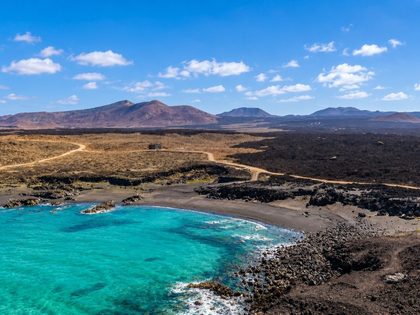
Playa de Papagayo Lanzarote — secluded golden sand cove with crystal-clear turquoise water surrounded by volcanic cliffs at the southern tip

Papagayo: the beach you work for

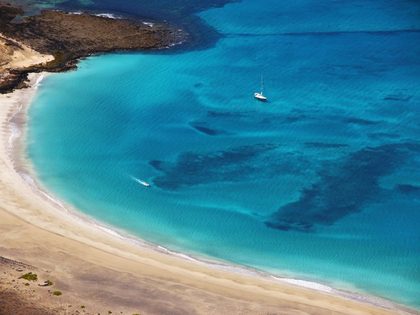
Five golden coves inside the Los Ajaches Natural Monument, at the southern tip of the island. The water is the colour of gin and the sand is fine enough to squeak. You reach it via a 6 km dirt track from Playa Blanca — bumpy but any normal car manages if driven slowly. There's a small parking fee (around €3, card payment preferred) and once you park, you walk to whichever cove suits your mood.

What makes it different: the coves are sheltered from the alisio by the Ajaches massif, so even on a windy day the water stays flat.

Access: 6 km dirt road from Playa Blanca · Fee: ~€3 parking
Local tip: Arrive before 10am in summer — by noon the parking barrier closes when the lot is full.
📍 Open Playa de Papagayo in Google Maps
B01
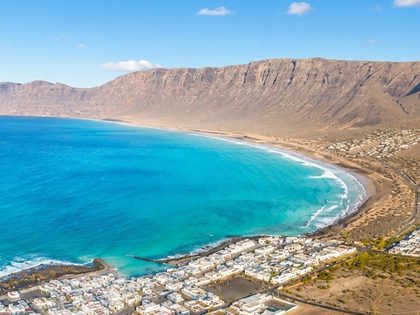
Aerial view of Caleta de Famara Lanzarote — long curved golden-sand beach, whitewashed village, turquoise Atlantic surf, and the volcanic Risco de Famara cliffs in the background

Famara: 6 km of sand, wind, and towering cliffs

The most iconic beach on Lanzarote. Six kilometres of dark golden sand, framed by the Risco de Famara. Caleta de Famara is a vibrant hub of surf schools and fish restaurants.

The truth: Famara is almost never calm. It's not a swimming beach for kids. Strong currents, big shore break, no lifeguards on the main stretch. You are here for the scale, the light, the walks, and the sunset.

Access: 30 min from Arrecife, LZ-10 north · Fee: Free parking
Local tip: If you only have one sunset in Lanzarote, make it here.
📍 Open Playa de Famara in Google Maps
B02
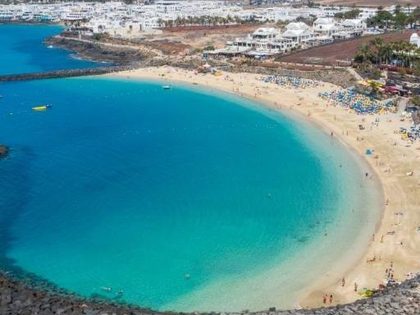
Aerial view of Playa Dorada in Playa Blanca Lanzarote — sheltered golden-sand bay with turquoise calm water, black lava breakwater, sun loungers and the Montana Roja volcano in the background

Playa Dorada: the safe family beach

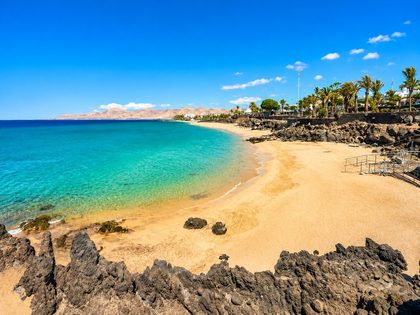
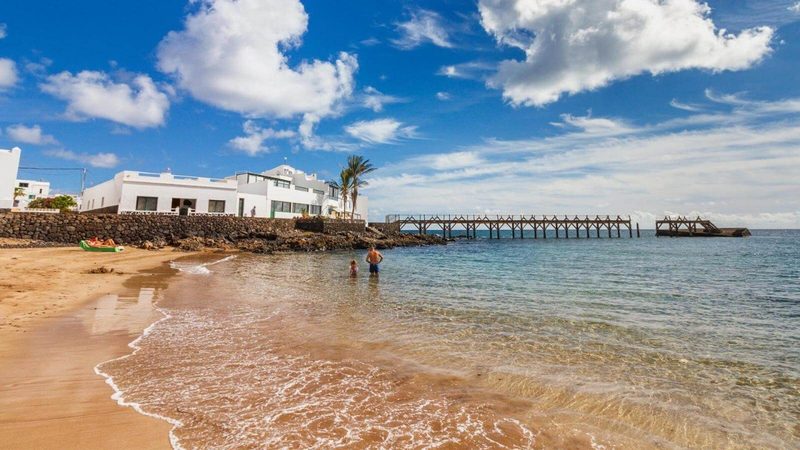
If you have children under 10, or you just want to swim 50 metres out without anxiety, this is it. In Playa Blanca, Playa Dorada is a sheltered bay with golden sand, calm shallow water, and a paved promenade. No rocks, no currents, no surprises.

Access: Right in Playa Blanca town · Lifeguards: Yes (summer)
Local tip: Mornings are best — by 2pm in August the beach is wall-to-wall.
📍 Open Playa Dorada in Google Maps
B03
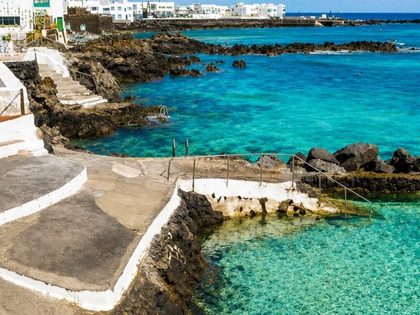
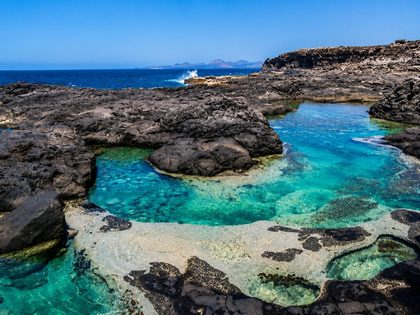
Punta Mujeres Lanzarote — natural volcanic rock pools along the coast of a small whitewashed fishing village on the northeast of the island, with crystal-clear turquoise water and stepped concrete platforms

Punta Mujeres: snorkel in volcanic rock pools

A small whitewashed fishing village on the northeast coast, where the lava from the old Corona volcano meets the sea in a series of natural rock pools. You go for clear water, calm pools, and the best free snorkelling on the island. Bring masks, fins, and water shoes.

Access: LZ-1 north toward Órzola, turn off at Punta Mujeres · Fee: Free
Local tip: Come at high tide — the pools are deeper. Just a 5-minute drive south in Arrieta, you'll find "El Charcón" (El Bañadero), a fantastic natural pool cut into the lava right next to Playa de la Garita.
📍 Open Punta Mujeres in Google Maps
B04
Sunset view from Famara beach Lanzarote — silhouette of surfers and the Risco de Famara cliffs against the orange and pink evening sky

Famara at sunset: the best hour on the island

Sunset at Famara is a separate experience. The cliffs to the west catch the last 20 minutes of direct sun, the wet sand mirrors everything.

Best months: October–March · Fee: Free
Local tip: Don't try to swim at sunset. If you want a drink after, drive 5 minutes down the hill to Caleta de Famara village.
📍 Open Famara (sunset) in Google Maps
B05
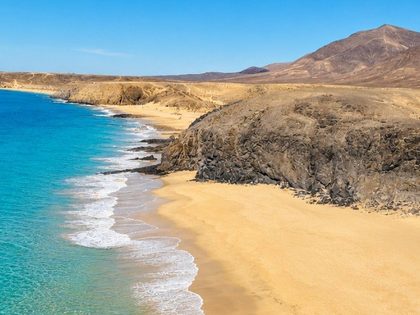
Cala de la Cera Lanzarote — small secret cove west of Papagayo, golden sand and crystal-clear turquoise water enclosed by volcanic cliffs in the Los Ajaches Natural Monument

Cala de la Cera: the secret cove next to Papagayo

Just west of the main Papagayo beach, around the headland. It is one-tenth the size of Papagayo proper, and most tourists don't bother with the extra walk. The water is the same Caribbean-look colour, but there's no shade and no facilities.

Access: Same dirt road as Papagayo, then walk west · Fee: ~€3 parking
Local tip: If Papagayo looks busy, walk 10 minutes further west to La Cera. You will probably have the cove to yourself.
📍 Open Cala de la Cera in Google Maps
B06
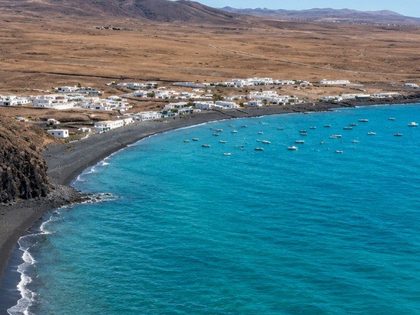
Playa Quemada Lanzarote — small cove of coarse black volcanic sand in a sheltered semicircular bay, whitewashed fishing village with boats anchored in the turquoise water

Playa Quemada: black sand, fishing village, no tourists

A tiny fishing village south of Tías. The beach is small (150m of coarse black volcanic sand) and slopes steeply into deep water. It's sheltered from the alisio by the southern hills.

The truth: It's not a swimming beach for small kids, but for adults who want black sand and spectacular fresh fish that came off the boat that morning — it's perfect.

Access: LZ-2 toward Yaiza, turn off at Playa Quemada · Fee: Free
Local tip: Pick any of the waterfront restaurants (Salmarina, 7 Islas, Casa Tino) — they are highly rated by locals. The vieja (parrotfish) is the local classic. Wear water shoes.
📍 Open Playa Quemada in Google Maps
B07
Playa Grande Puerto del Carmen Lanzarote — sheltered urban beach of fine golden sand in a curved bay with turquoise water, palm-lined promenade and the Avenida de las Playas behind

Playa Grande (Puerto del Carmen): the wind-sheltered urban beach

The main beach of Lanzarote's largest resort. One and a half kilometres of golden sand, protected from the alisio by the cliffs to the north, with the Avenida de las Playas promenade behind it. This is the practical choice with reliable swimming.

Access: Right in Puerto del Carmen · Lifeguards: Yes (summer)
Local tip: Walk to the southern end for more space. The smaller Playa Chica at the northern end is the ultimate diving and snorkelling hub.
📍 Open Playa Grande in Google Maps
B08
Caletón Blanco near Orzola Lanzarote — small coves of almost-white sand separated by strips of black lava, with crystal-clear turquoise water and natural rock pools forming at low tide

Caletón Blanco: white sand, black lava, natural pools

Near Órzola. Two small coves of almost-white sand separated by strips of black lava. At low tide, the lava forms natural swimming pools.

Access: 5 min walk from parking, LZ-1 north · Fee: Free
Local tip: Time it for low tide if you want the natural pools. Combine with a morning ferry to La Graciosa.
📍 Open Caletón Blanco in Google Maps
B09
Aerial view of Playa del Risco Lanzarote — wild empty crescent-shaped beach of fine golden sand at the foot of the Risco de Famara cliffs, with crystal-clear turquoise water and volcanic black rock

Playa del Risco: the off-the-beaten-path beach for walkers

A wild, empty beach at the foot of the Risco de Famara cliffs. The only way down is the "Camino de los Gracioseros", a demanding path from the small village of Ye. The beach is golden sand, the waves are big, and the cliff face behind you is breathtaking.

Access: A demanding 40–60 minute hike down the cliff face.
Local tip: The hike back up requires excellent physical condition. Bring plenty of water (much more than you think you'll need) to avoid heatstroke on the ascent. It is not a swimming beach due to dangerous currents.
📍 Open Playa del Risco in Google Maps
B10
Los Charcones Lanzarote — wild natural swimming pools cut into black volcanic rock on the southwest coast near the Pechiguera lighthouse, with crystal-clear turquoise water and the Atlantic beyond

Los Charcones: the wild natural pools of the south

Hidden on the southwest coast near the Pechiguera Lighthouse (Playa Blanca) are Los Charcones, some of the most spectacular natural pools on the island. Ranging from shallow puddles to deep natural swimming holes, they sit right next to the ruins of an abandoned hotel, exposed to the wild Atlantic waves.

The truth: Getting here requires driving a very rough, rocky dirt road. Low-clearance rental cars often get damaged, so driving extremely slowly or parking further away and walking is advised.

Access: Southwest coast, near Playa Blanca.
Local tip: Be very careful with the waves — do not swim in the pools closest to the ocean edge during high swell, as freak waves can easily sweep you out to sea.
📍 Open Los Charcones in Google Maps
B11
Playa de las Malvas Tinajo Lanzarote — wild cove of dark volcanic sand and gravel with the eroded ancient lava flows of Timanfaya in the background and turquoise Atlantic water

Playa de las Malvas: volcanic mystery and absolute solitude

A small, wild cove of dark volcanic sand and gravel located in Tinajo, formed by the erosion of ancient lava flows from Timanfaya. It faces the open Atlantic Ocean, meaning it is highly exposed to heavy waves.

Access: Drive to Tinajo, follow signs toward Tenesár, then 5 km along a bumpy dirt track.
Local tip: The seabed is rocky, so water shoes are essential. Look out for local shell gatherers searching for limpets.
📍 Open Playa de las Malvas in Google Maps
B12
Playa de la Garita Arrieta Lanzarote — wide golden-brown sandy beach with calm shallow water, families, and a chiringuito beach bar in the background

Playa de la Garita: the authentic local family beach

Located in the northern coastal village of Arrieta, this 800-metre stretch of fine golden-brown sand is beloved by locals. It offers a relaxed, authentic vibe completely away from the massive tourist resorts. Protected enough for safe family swimming but occasionally catching enough swell for beginner surfers and bodyboarders.

Access: LZ-1 north, turn off at Arrieta · Fee: Free parking
Local tip: Eat at any of the nearby restaurants in Arrieta — they serve some of the best fresh fish on the island. Don't forget to check out "El Charcón" natural pool just at the southern end of the beach.
📍 Open Playa de la Garita in Google Maps
B13
Playa del Janubio Lanzarote — wild cove of black volcanic sand with reddish volcanic cliffs and turquoise Atlantic water on the southwest coast near the Janubio salt flats

Playa del Janubio: dramatic black sand and wild waves

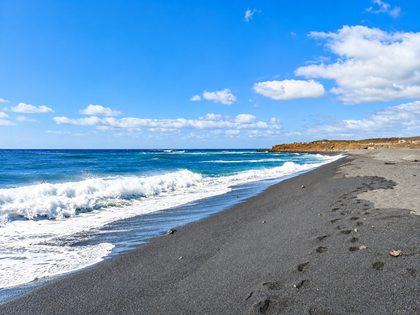
Situated on the southwest coast right next to the famous Janubio salt flats (Salinas de Janubio), this is a stunningly rugged beach made of pitch-black volcanic sand and pebbles. The contrast between the dark beach, the white salt flats, and the deep blue ocean is an absolute photographer's dream.

The truth: Do not swim here under any circumstances. The currents are notoriously treacherous, there is a steep drop-off, and the waves crash heavily onto the shore. You come here to admire the raw power of nature, not to bathe.

Access: LZ-704 near Yaiza, follow signs for Salinas de Janubio · Fee: Free parking
Local tip: This is one of the most spectacular spots on the island to watch the sunset. Combine your visit with a guided tour of the adjacent salt flats or a stop at the Mirador de las Salinas.
📍 Open Playa del Janubio in Google Maps
B14

Nudist beaches — three honest options

Charco del Palo (northeast, near Mala)

It is not just a beach, but the first officially naturist village in the Canary Islands. A small coastal community with natural rock pools, a couple of bars, and a clear policy of textile-free swimming and sunbathing. It is tolerated and respected.

Famara (north, central section)

Nudism is tolerated — not officially designated, but nobody hassles you. The central stretch, especially on weekdays, is where locals who don't want tan lines go.

Cala del Pozo (Papagayo area)

The eastern coves of the Papagayo complex lean toward the nudist side. The main Papagayo beach is textile.

One rule: bring a towel to sit on. No phones out, no staring, no photos.

Beach etiquette — what locals wish tourists knew

Take your rubbish with you

Bins exist at the urban beaches; they don't at the wild ones.

No fires on the beach

It's illegal everywhere in the Canaries.

Don't take stones, sand, or shells

The beach is a protected natural area. Leave it.

Speakers off after 9pm

If you're at an urban beach in summer with friends, take the music back to your apartment after 9pm.

Park only in the marked areas

Wild parking blocks the dirt tracks, and the police do ticket.

Respect the lifeguard flags

Red flag = don't enter. Yellow = careful. Green = go.

FAQ

Which beach in Lanzarote has the warmest water?

Playa Blanca and the Papagayo coves (south). The temperature ranges from around 17–18°C in winter to 22–24°C in autumn.

Can you swim at Famara?

Yes, but with extreme caution. The main 6 km beach has strong currents. The village section tends to be slightly more sheltered, where you'll find lifeguards in summer.

Is the parking at Papagayo free?

No — there's a small fee (~€3) at the barrier. Card payment preferred.

What's the best beach for kids in Lanzarote?

For under 5s: Playa Dorada (Playa Blanca). For 5–10s: Punta Mujeres rock pools.

Are there any beaches in Lanzarote with no sand?

Yes — the natural rock pools of Punta Mujeres, El Charcón (Arrieta), Los Charcones, and Charco del Palo. Black volcanic rock and crystal water.

Where can I park for free near a good beach?

Famara, Playa Dorada, Caletón Blanco, Playa del Risco, Playa Quemada, and Cala de la Cera all offer free parking.